
True Power: Why the G Series 1600W Continuous Output Changes the Game
In the ebike industry, “peak power” is often used as a marketing gimmick. Many bikes claim high wattage that they can only sustain for a few seconds before the motor begins to overheat and throttle down. For the 2026 Optibike G Series, founder Jim Turner focused on a different metric: 1600W of Continuous Power when in the OHV mode on the Altus.
In this technical update, Turner explains the engineering shift required to move from the R17 platform to the G Series and why “True Power” is the only number that matters when you’re facing a 40% grade hill.
The Heat Sink
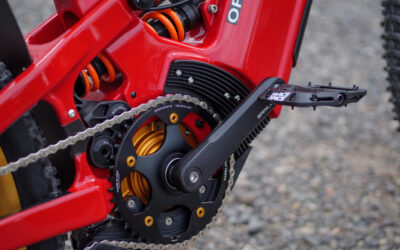
One of the most visible differences on the G Series is the massive integrated heat sink. Jim Turner points out that most European and mass-market ebikes don’t have heat sinks because they simply don’t produce enough power to generate significant heat.
“When you’re putting out 1600 watts continuous power, there’s a lot of heat coming out of the controller,” Turner explains. By mounting the controller directly to a large heat sink, Optibike ensures the G Series can maintain its full power output for the entire duration of the battery charge, even in 100-degree weather.
Continuous Power vs. Nominal Ratings
While standard ebikes are often rated at 250W or 500W, the G Series E Venture series offers a massive leap in performance:
- Optibike G Series: 1600 Watts Continuous Power.
- Standard Ebikes: 250W – 500W (Nominal/Peak).
This power allows for higher speeds and easier climbing on forest roads and steep terrain where traditional motors would stall. Because the motor is “overbuilt” for this level of output, it also boasts incredible longevity, lasting far longer than motors pushed to their absolute limits.
Torque and the “Diesel” Experience
While wattage provides the speed, 190Nm of torque provides the “chug.” Jim compares the G Series to a diesel engine; it has the raw strength to keep moving even as the hill gets steeper. This high torque means riders can stay in higher gears longer and shift less frequently, making the riding experience more intuitive and less fatiguing.
Advanced Frame Engineering
To support this level of power, Optibike redesigned the frame from the ground up:
- Low Standover Height: Using reinforced carbon fiber to provide a rigid platform that is easy for riders of all ages to mount.
- 170mm Travel: A massive amount of suspension travel packaged into a low-center-of-gravity design.
- Bolt-in Motor: A new motor housing that is easier to service, quieter to ride, and allows for shorter wiring—improving overall electrical performance.
Built for Decades, Not Seasons
Unlike the “disposable” nature of many modern ebikes, the G Series is designed to be an heirloom-quality investment. Optibike continues to service bikes built in 2008, and the G Series follows this same philosophy. The motors are designed to be rebuilt, not replaced, ensuring your bike stays on the trail for decades.
Experience the power of 1600W continuous performance. Visit Our Bikes to learn more about the G Series or Contact us to schedule your test ride in Paonia, Colorado.

0 Comments