
Why Most Electric Bikes Fail on Steep Hills
I’ve spent over two decades designing and building electric bikes here in Colorado, and if there’s one question I hear more than any other, it’s this: “What is the best electric bike for steep hills?” It’s a fair question — and one that most e-bike manufacturers don’t want you to ask too closely. The truth is, the majority of electric bikes on the market today were never engineered to handle sustained climbing on grades over 8 percent. They overheat, lose power, and leave riders stranded halfway up a pass.
At Optibike, we build every bike by hand in Paonia, Colorado — a small mountain town surrounded by passes that regularly exceed 10 percent grade. Our backyard is our testing ground, and that’s why our approach to high-torque electric bike motors is fundamentally different from what you’ll find at big-box retailers.
Understanding Torque: The Single Most Important Spec for Hill Climbing
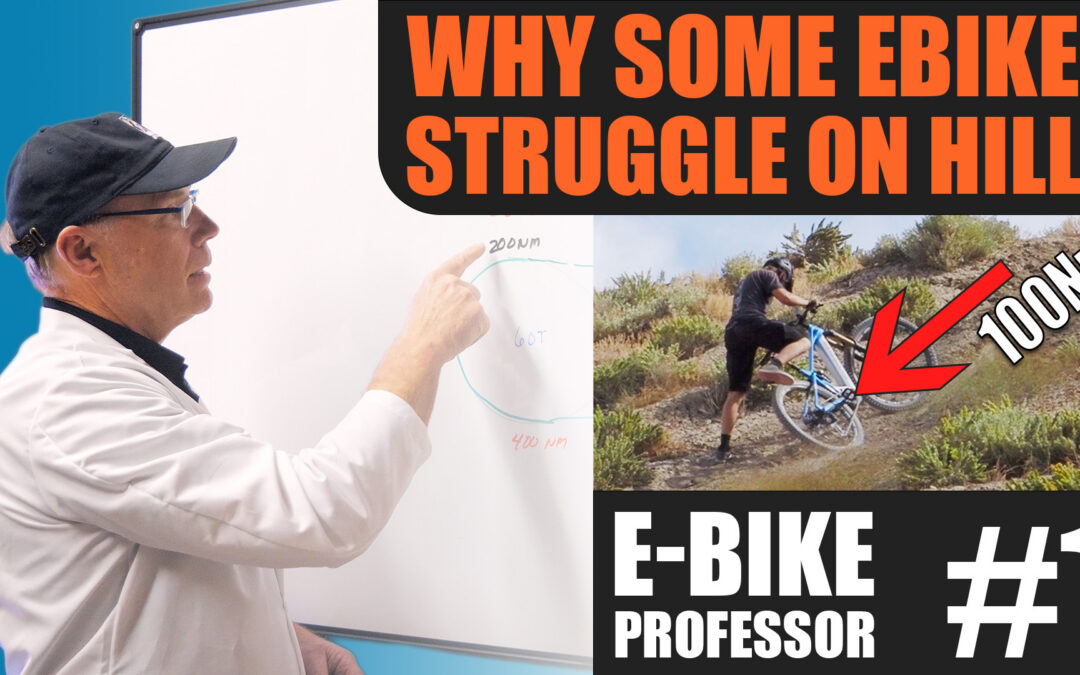
When shopping for an electric bike for steep grades, most people focus on wattage. But wattage alone doesn’t tell you how a motor performs under load. What really matters on a steep hill is torque — the rotational force that turns your wheels against gravity. Think of it this way:
- Watts tell you how fast you can go on flat ground
- Torque (measured in Newton meters) tells you how well you can climb
- Battery capacity (Wh) determines how many hills you can climb before recharging
Most consumer e-bikes deliver between 40Nm and 85Nm of torque. That’s adequate for gentle inclines and bike paths, but it’s nowhere near enough for real mountain terrain. Our PowerStorm MBB mid-drive motor produces a class-leading 190Nm of torque — more than double what premium competitors offer. That’s the difference between walking your bike up a mountain pass and riding it with confidence.
What Makes an E-Bike Excel on Mountain Passes
After building high-performance electric bikes for riders across the country, I’ve identified four critical factors that separate a genuinely capable hill-climbing e-bike from one that just looks the part:
1. Mid-Drive Motor Placement. A mid-drive motor sits at the cranks and leverages your bike’s gears, multiplying torque on steep climbs. Hub motors, by contrast, work against a fixed gear ratio and struggle on sustained grades. Every Optibike uses a mid-drive system specifically because of this advantage.
2. Sustained Power Without Overheating. Many e-bike motors deliver peak torque for a few seconds before thermal throttling kicks in. On a 20-minute climb up a mountain pass, you need a motor built for continuous output. Our PowerStorm motor maintains 750 watts of continuous power without overheating — even on the longest, steepest climbs Colorado can throw at it.
3. Battery Capacity for Vertical Gain. Climbing eats battery faster than any other riding condition. An e-bike with a 500Wh battery might give you 40 miles on flat ground but only 15 miles in mountainous terrain. Our R22 Everest carries a massive 3,260Wh dual-battery system capable of 24,000 feet of elevation gain on a single charge — enough to literally climb Mount Everest.
4. Proper Gearing and Drivetrain. A powerful electric bike for mountain passes needs a wide-range cassette with low gearing for the steepest pitches. Combined with a high-torque mid-drive, proper gearing means you maintain a comfortable cadence even when the road tilts to 15 percent.
Matching the Right Optibike to Your Hill-Climbing Needs
Not every rider needs a bike built for Himalayan expeditions. Here’s how I recommend choosing the right high-torque electric bike based on the terrain you actually ride:
For Hilly Commutes and Moderate Grades (4–8%): The Optibike Argon weighs just 37 pounds and handles grades up to 6 percent with ease. If your daily commute includes a few hills but nothing extreme, the Argon’s 518Wh battery and lightweight carbon belt drive make it the perfect e-bike for a hilly commute without the bulk of a full mountain platform.
For Serious Trail Riding and Steep Singletrack (8–12%): The G2 Loki is our dedicated Class 1 eMTB with 190Nm of torque and a 1,440Wh battery. It’s built for aggressive singletrack where steep, technical climbs are part of every ride. With nearly double the battery capacity of competing eMTBs, the Loki lets you focus on the trail instead of watching your battery percentage.
For Mountain Passes and All-Day Adventures (12%+ grades): The G2 Altus is our E-Venture platform — 190Nm of torque, long-travel suspension, and custom carbon fiber construction. It delivers assist up to 36 mph and is hand-built to your exact body mechanics. For riders who measure their days in vertical feet, the Altus is purpose-built for steep mountain pass riding.
For Extreme Range and Expedition-Level Climbing: The R22 Everest is in a class by itself. With 300+ miles of range and enough battery to climb 24,000 vertical feet, it’s the best electric bike for long-distance mountain touring. If you’re planning multi-day bikepacking trips through mountain passes, nothing else comes close.
Real-World Performance: Climbing Colorado’s Toughest Passes
I don’t just build these bikes — I ride them. Our team regularly tests on passes like Kebler, McClure, and the Grand Mesa, where sustained grades of 8 to 12 percent are the norm and elevation tops 10,000 feet. At altitude, where thin air robs both riders and motors of efficiency, having 190Nm of torque and a properly engineered thermal management system isn’t a luxury — it’s a necessity.
We’ve had customers ride our bikes up mountain passes that they never imagined possible. Riders in their 60s and 70s who thought their climbing days were behind them. Riders recovering from knee surgery who can now enjoy mountain roads again. That’s the real power of a high-performance electric bike built specifically for hills — it opens up terrain that was previously off-limits.
What to Ask Before You Buy
If you’re shopping for the best electric bike for steep hills, here are the questions I recommend asking any manufacturer:
- What is the continuous torque rating — not just the peak?
- How does the motor perform after 20+ minutes of sustained climbing?
- What is the total battery capacity in watt-hours, and how much vertical gain can it support?
- Is the motor a mid-drive or hub motor?
- Can the bike be custom-fitted to my body and riding style?
These questions will separate the genuinely capable hill-climbing e-bikes from the ones that only perform well in marketing materials.
Built in Colorado, Built for Mountains
Every Optibike is hand-built and custom-tailored to the individual rider at our shop in Paonia, Colorado. We don’t mass-produce bikes in overseas factories — we build them one at a time, right here in the mountains where they’ll be ridden. That’s been our approach for over 20 years, and it’s why riders who are serious about high-torque electric bikes for steep terrain choose Optibike.
If you’re ready to find the right e-bike for your hills — whether that’s a daily commute with a few steep blocks or a multi-day mountain pass adventure — I’d love to help. Reach out to our team and we’ll match you with the right build for your terrain, your body, and your riding goals.
0 Comments